In 2027 a major new pilot exhibition opens in Leith Custom House

Leith Custom House, Doors Open Day 2024

In 2027 a major new pilot exhibition opens in Leith Custom House

In 2027 a major new pilot exhibition opens in Leith Custom House: Leith 900.

In the lead up to the 900th anniversary of the first written reference to Leith in 1128, this exhibition will serve as both a celebration of the past and an opportunity for the public to share their stories and ideas for the future Leith Museum, set to be located in the historic Custom House once it is restored.

Following a national competition which saw esteemed firms from across the UK bid to design this digital-led pilot exhibition, Scottish Historic Buildings Trust is delighted to announce that McCue and People Make Culture will be bringing Leith’s stories to life.

Dr Samuel Gallacher, Director of SHBT, said:

SHBT Logo

“After many years, momentum is building for the restoration and transformation of Custom House. This pilot exhibition will demonstrate why it is long overdue that Leith has a museum, and one which blends cutting-edge technology with timeless tales of people, passion and perseverance. Drawing on newly digitised material and items from collections across the country, this exhibition will span the centuries in the stories it tells and will evolve during its run. We could not be happier to have People Make Culture and McCue – and their Leith-based subcontractors – developing this exciting exhibition.”

McCue will lead the fabrication and installation of the exhibition and have developed a nationwide reputation for quality over many years.

Alan Stewart, Head of Business Development at McCue said:

“How to create a high-quality exhibition in an unrestored building, using spaces not normally accessible to the public, is quite the challenge – but one we are very much looking forward to. Custom House is an important building and Leith is a special place, and we will keep that in mind as we turn People Make Culture’s designs into reality, delivering an exhibition worthy of both.”

The team at People Make Culture will utilise their extensive experience built up over decades of working on innovative and engaging exhibitions.

Abby Coombs, Co-Founder of People Make Culture, said:

“Leith 900 brings together everything we’re passionate about – innovation and tradition, untold stories, and a rich heritage context. But the ultimate ambition is most important; to design an exhibition that has meaningful impact beyond the anniversary celebrations. It will evolve past opening, inspiring and enabling the people of Leith as a platform for community engagement and contribution, laying the foundations for their future museum. This is the first seed, and we can’t wait to see it grow.”

More details of the exhibition will be announced in the coming weeks, including an opportunity for the public to contribute directly to the Leith Museum Collection on Doors Open Day on 26 September.

Repair work begins on Laidhay Winnowing Barn in Caithness 

Repair work begins on Laidhay Winnowing Barn in Caithness 

Home > Repair work begins on Laidhay Winnowing Barn in Caithness 

Vital repair work is beginning on the Laidhay Winnowing Barn, a Category A listed building at Laidhay Croft Museum near Dunbeath. The barn’s roof and part of its east wall collapsed after heavy snowfall in 2022, and the building has stood on Historic Environment Scotland’s Buildings at Risk Register ever since. 

The collapsed barn

The Lappan and Laidhay Trust (LLT), the charity now responsible for the museum and barn, has appointed Scottish Historic Buildings Trust (SHBT) to lead the restoration. SHBT is working alongside a specialist team: conservation architects Simpson & Brown, structural engineers Narro Associates and building archaeologists Addyman Archaeology, with Ross Balharry of Bedrock Buildings appointed as principal contractor.

Dr Lesley Bethune, Vice Chair of LLT, said :

“The Lappan and Laidhay Trust is excited to be taking this first step towards restoring and improving the Laidhay Croft Museum, preserving this unique piece of Caithness history.”

Caithness Voluntary Group (CVG) has championed the repair project and the wider site for several years, ensuring that this site of national heritage significance can have a sustainable future.

Alistair Jack, Chief Officer of CVG, said:

“This important stop on the NC500 has been the cause of concern for several years and reinvigorating both the popular tearoom and the governance of the museum has been an important focus for us. With the repair of the barn, a new chapter for Laidhay begins.”

Believed to date from at least the mid-nineteenth century, and likely earlier, the barn is thought to be one of very few survivors of its type and age anywhere in Scotland, retaining much of its original material. Its roof is a rare example of the traditional cruck-frame construction once common across Caithness with sturdy tree branches trussing the roof as well as rafters using recycled timber thought to include parts of a boat, potentially from the herring fisheries.

Inside the barn: the roof crucks

The barn is a precious physical record of the crofting life that shaped the area’s history, and the wider museum and cafe remains a well-loved stop for visitors travelling the North Coast 500. 

Dr Samuel Gallacher, Director of Scottish Historic Buildings Trust, said:

“The Laidhay Winnowing Barn is a surviving example of the cruck-framed structures that were once common across Caithness but are now exceptionally rare. To lose it would mean losing a piece of traditional craftsmanship and history.


Restoring the barn faithfully to its original specification is about more than conserving a unique building: it’s about keeping those traditional skills alive. We’re grateful to the funders who share our commitment to Caithness’s heritage and are helping make this possible.” 

Re-thatching of the roof (1991)

A phased approach 

The work is being carried out in two phases. Phase 1, now under way, involves carefully dismantling what remains of the collapsed roof, recording and cataloguing every timber and stone as it comes down, and rebuilding the east wall to protect the barn over winter. Phase 2, planned for spring 2027, will see the roof rebuilt and rethatched, reusing as much of the original material as possible and sourcing new material locally where it is needed. 

Throughout, the aim is to restore the barn as faithfully as possible, using traditional materials and methods and keeping as much of the original fabric as can be safely reused. 

Funding 

The project is supported by Historic Environment Scotland, alongside the Pilgrim Trust, Architectural Heritage Fund, William Grant Foundation and the Dounreay Community Fund.  

Open day: Saturday 5 September

LLT and SHBT are inviting the local community and visitors to an open day at the barn on Saturday 5th of September between 10am and 3pm. Everyone is welcome to drop in, meet the project team, see the site and the work in progress, and find out more about the barn’s history and what happens next. 

Celebrating Hawick CARS

Celebrating Hawick CARS

Home > Celebrating Hawick CARS

In December, we gathered at the Borders Towerhouse Textile Museum to celebrate the successes of the Hawick Conservation Area Regeneration Scheme. The evening brought together the partners, property owners, contractors and community supporters who have made this heritage-led regeneration project possible.

Photography © ILF Imaging

Hawick CARS is a partnership project developed by Scottish Borders Council in conjunction with a community-based Hawick CARS Steering Group, which secured funding from Historic Environment Scotland in March 2019. Running until March 2025, the scheme has an overall budget of just over £1.5 million, funded by Historic Environment Scotland (£1,314,800), the South of Scotland Enterprise (£60,000) and Scottish Borders Council (£200,000).

The project focuses on supporting the repair and future maintenance of traditional buildings in Hawick town centre, helping property owners undertake repairs and restoration to accepted conservation standards.

SHBT has been pleased to provide Project Officer support for this crucial work, assisting with day-to-day project delivery and management.

At December’s celebration, we welcomed Scottish Borders Council members Clair Ramage, Jane Cox, Watson McAteer and Simon Montford, alongside the Lord-Lieutenant for Roxburgh, Ettrick and Lauderdale, Mr John Jeffrey. Council Officers Debbie McLean and Sarah Altrock joined us, along with representatives from the Community Council, Community Development Trust and Archaeological Society.

We were also joined by the homeowners, businesses and contractors whose dedication has brought new life to Hawick’s historic buildings.

Image from 2024 of young trainees in Hawick building their skills in the traditional trades

The scheme offers grants to property owners for repairs to traditional buildings (pre-1919) within a defined area of the town, with funding ranging from 50-75% of eligible costs up to a maximum of £15,000.

Beyond building repairs, the project has supported upskilling of local building trades in conservation techniques and the development of community heritage projects.

Support Us

Hawick CARS demonstrates what can be achieved when heritage organisations, local authorities and communities work together towards a shared goal: preserving the historic character that makes Scottish towns so distinctive and their built heritage so important, whilst ensuring these buildings remain viable for contemporary use.


Traditional Building Skills Training Launching in Eyemouth

Traditional Building Skills Training Launching in Eyemouth

Home > Traditional Building Skills Training Launching in Eyemouth

Scottish Historic Buildings Trust celebrated the launch of its new traditional skills training scheme in Eyemouth with a stonemasonry taster day in the town centre. Josephine Crossland, local sculptor and stone mason, guided participants to carve a letter or design into Bath Stone provided by Mike Viaene of Roluna Stone. The demonstration day was a chance to introduce the new training course, starting in January 2026, which will offer a group of fourteen trainees the chance to take the first steps towards a career working on historic buildings.

Image: Josephine Crossland, local stone carver and artist, guides a participant during the skills taster day.

Building Traditional Skills Eyemouth (BTSE) will run part-time for 20 weeks from January 2026, offering two days of training each week in the skills needed to work on historic buildings, such as stonemasonry and joinery. Fourteen participants will have the opportunity for hands-on learning with skilled trainers, and those who complete the course can expect to gain a First Aid certificate and their Construction Skills Certification Scheme (CSCS) card, which is essential for anyone looking to work on construction sites in the UK.

The scheme, which is funded by the Scottish Borders Local Employability Partnership Grants and the HCI Skills Gateway, is open to participants aged 16 and over, whether just leaving school or looking for a rewarding new career path. Trainees may be eligible to receive a training bursary of £50 per week for taking part.

Dr Samuel Gallacher, Director of Scottish Historic Buildings Trust, said:

“The success of our conservation projects depends on the availability of the traditional skills required to work on historic buildings. As the need to maintain and repair Scotland’s traditionally-built homes, shops, and public buildings grows year by year, the demand for these key construction skills continues to increase. We’re proud to be launching this programme in Eyemouth, with its fine architectural heritage, and those people who join the scheme here could be taking the first step in a long and rewarding career.”

Trainees will have the opportunity to undertake hands-on training at one of Eyemouth’s most significant historic buildings, the Category A listed Gunsgreen House. Repair works including raking out and repointing to the masonry rubble retaining wall, along with joinery repairs to window sills, will provide valuable introductory learning opportunities for course participants, as well as delivering benefits to the fabric of the historic building.

Riddell Graham, Chair of the Gunsgreen House Trust said:

“Too often, young people and career-changers who live in smaller rural towns in Scotland find they are required to travel long distances to seek training. The Building Traditional Skills Eyemouth scheme will bring traditional construction skills training to people in Eyemouth, increasing the opportunities available to people on their doorstep. We are delighted that the environs of Category A-listed Gunsgreen House will provide a training site for this exciting pilot project.”

Find Out More

Are you interested in joining the traditional skills training programme? Do you know somebody who might be interested?

Get in touch with us for more details and to register your interest.

Image: L-R Kevin McClure (Element Scotland), Jess Burrows (SHBT), taster day participants, Mike Viaene (Roluna Stone), and Josephine Crossland (stone carver).

New Technology for Restoration at the Tron Kirk

New Technology for Restoration at the Tron Kirk

Home > New Technology for Restoration at the Tron Kirk

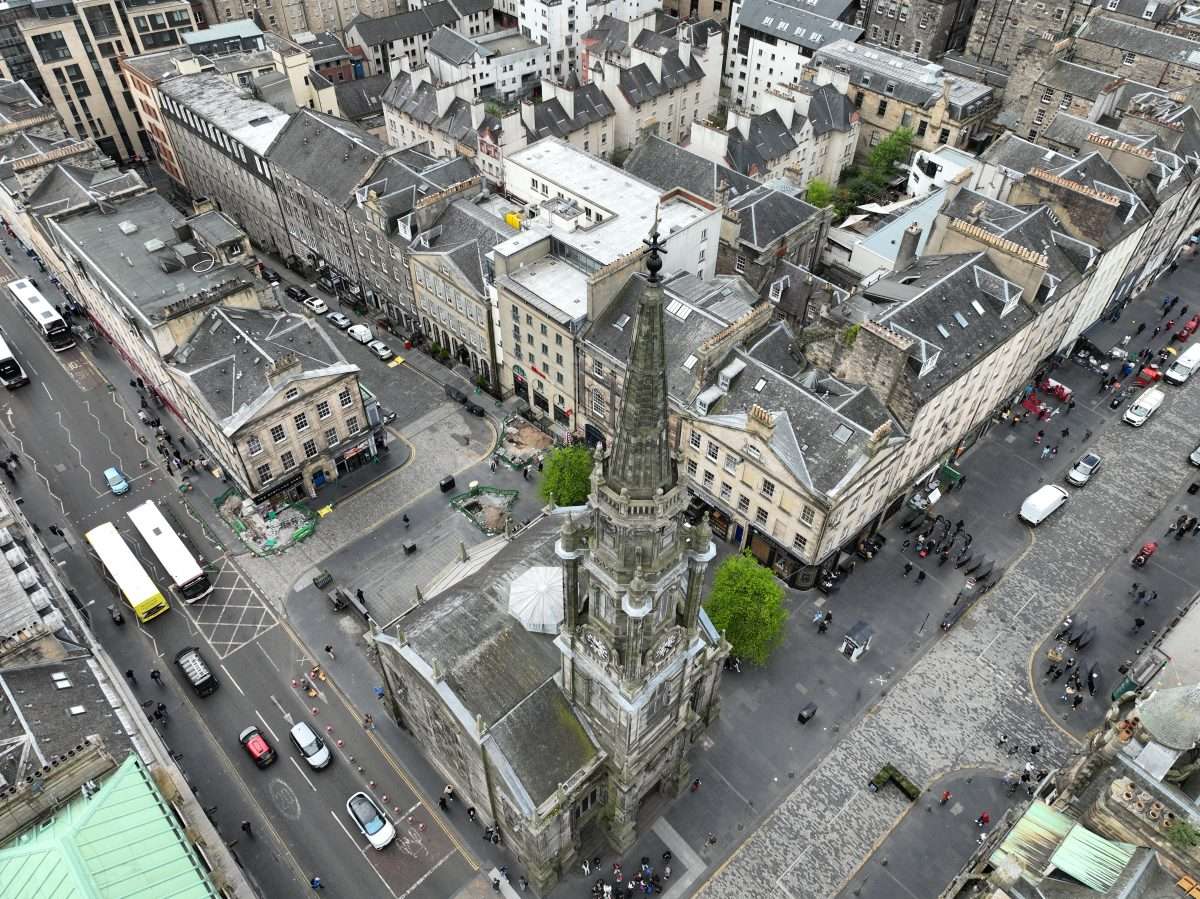
Photo credit: Archilink

The Scottish Historic Buildings Trust (SHBT) is pleased to announce the commencement of the first phase of restoration works at the historic Tron Kirk, situated on Edinburgh’s Royal Mile.  

Owned by the City of Edinburgh Council and leased to SHBT, the Tron Kirk has undergone a remarkable journey of transformation throughout its long history. In recent years, it has served as a vibrant artists’ market operated by the Scottish Design Exchange, showcasing the work of local makers and creatives.  

“The Scottish Design Exchange team and our artists who trade from the Tron Kirk Market, are excited to see the plans for the renovation of the building progressing. The huge success of the Makers Market over the past three years, has brought a wonderful community of local artists to the heart of the Royal Mile, and the feedback from visitors to the City and from local residents has been fantastic. We have a great working relationship with SHBT, and look forward to being part of the future sustainable use of the Tron Kirk.”

Lynzi Leroy, CEO, Scottish Design Exchange

This adaptive reuse has demonstrated the continued cultural and commercial potential of the building, despite its placement on the Buildings at Risk Register since 2003. 

While the artists’ market has kept the building in active use, significant conservation work is now required to secure the future of this landmark. SHBT has initiated a comprehensive programme of surveys and assessments to better understand the building’s current condition and inform the next steps in its restoration. 

A team led by Simpson & Brown, an Edinburgh-based architectural and archaeological practice with long-standing expertise in heritage conservation, is delivering an updated Conservation Statement and Condition Survey. They are joined by engineering consultants Harley Haddow and cost consultants Kenneth Ferguson and Partners. 

A key component of this initial phase is a full measured survey of the Tron Kirk, led by architectural survey specialists Archilink. Utilising cutting-edge technology, including LiDAR and drone photogrammetry, Archilink is creating a highly detailed, three-dimensional digital model of the entire site. This includes capturing below-ground archaeology as well as the external and internal fabric of the building. 

The data gathered will serve as a vital tool in guiding the restoration process. By producing accurate 3D models and 2D architectural drawings, the surveys will allow architects, engineers, and conservation specialists to fully visualise the building’s condition and plan interventions with precision. The ability to explore every angle of the building, down to millimetre accuracy, helps ensure that all decisions are informed by reliable, up-to-date information. Furthermore, this digital documentation will provide a long-term resource for managing the building in the future. 

Archilink’s drone imagery has already offered remarkable new views of the Tron Kirk, enhancing our understanding of its structure and setting within the cityscape. 

The urgency of this work was highlighted last year when a section of masonry fell from the building. The City of Edinburgh Council acted swiftly to carry out necessary repairs and make the site safe. These efforts underline both the vulnerability of the building and the importance of proactive restoration. 

“The Tron Kirk has been a well-loved gathering place on the Royal Mile for centuries and its future is safe in the hands of the Scottish Historic Buildings Trust. They have a long track record of preserving landmarks around the city, from the Old Town’s Riddle’s Court to Leith’s Custom House, and we’re looking forward to seeing their important and careful conservation work take shape.”

Councillor Mandy Watt, Finance and Resources Convener, City of Edinburgh Council

The first phase of this project has been made possible thanks to the generous support of Edinburgh World Heritage Trust and the William Grant Foundation through the Architectural Heritage Fund. SHBT is grateful for their backing and looks forward to sharing further updates as work progresses. 

SHBT announces community partnership with leith civic trust and City of edinburgh council

Group of 50 people standing on the wharf outside Leith Custom House

SHBT announces community partnership with leith civic trust and City of edinburgh council

Home > SHBT announces community partnership with leith civic trust and City of edinburgh council

Group of 50 people standing on the wharf outside Leith Custom House

Scottish Historic Buildings Trust, City of Edinburgh Council and Leith Civic Trust Announce Community Partnership to secure the future of Leith Custom House. 

Scottish Historic Buildings Trust (SHBT) is delighted to announce a new community partnership with Leith Civic Trust aimed at securing the long-term future of Leith Custom House. The collaboration promises to transform this landmark historic building into a vibrant civic space and Scotland’s first fully digital museum, creating a ‘town square for the twenty-first century’ that will celebrate Leith’s unique culture and heritage. 

“We are thrilled to be partnering with Leith Civic Trust to help us realise the long-held community desire for a museum for Leith. The ambition has always been for this museum to be managed by the community through a community-led charitable trust who would ensure that the museum responds to local needs and aspirations, Leith Civic Trust will help us realise this goal together.  

This project has been a long-time in development, but following the agreement last year with Edinburgh Museums & Galleries, we are delighted that the project now has real momentum”  

Maggie Wright, Chair, Scottish Historic Buildings Trust

Following from the strategic partnership with City of Edinburgh Council Museums & Galleries agreed last October, the new community partnership with Leith Civic Trust will ensure that this project is developed for, and by, the local community.

Leith Civic Trust will be adopted by SHBT as the future operator of the groundbreaking museum at the heart of this innovative restoration project. This marks an exciting new chapter for Leith Civic Trust whose work for over two decades has championed the history and heritage of Leith.  

SHBT will support Leith Civic Trust in growing its membership and recruiting new trustees, who will receive in-depth training to manage the digital museum once the restoration is complete. 

“Since our foundation in 1968, Leith Civic Trust has been dedicated to preserving and championing the beauty, history and character of Leith. Leith has a wealth of distinctive stories to tell, and we are delighted that the new museum at Custom House will be a space where all Leithers, old and new, can see themselves represented. We look forward to welcoming new Members as we embark on this exciting journey together with SHBT and encourage anyone who may be interested in being involved to get in touch.” 

Cron Mackay, President, Leith Civic Trust 

To celebrate this community partnership, SHBT hosted an event on 9th May, to bring together friends and partners from across Leith to open the call for wider participation with the project as the fundraising and development phase begins. 

With the sunshine blazing down on Leith, we were delighted to welcome so many figures from across the Leith Community to Leith Custom House. It was a wonderful opportunity to bring everyone together to discuss the future of the Leith Custom House project and we are thrilled that the project has received so much support from the community of Leith.

“The City of Edinburgh Council is delighted to support Leith Custom House which will benefit both the local community and Leith’s economy as a major destination in its own right.  
  
“When we bought this building with the city’s Common Good Fund over a decade ago, we could not have hoped for such an exciting concept as is being proposed. There’s widespread enthusiasm for the project, which would bring pride to the local area and an important new visitor attraction on the Shore. 
  
With these new partnerships and the project’s strong candidacy to benefit from Edinburgh’s Visitor Levy, we feel the time is right to unlock the potential of Leith Custom House.” 

Cllr. Jane Meagher, Leader – City of Edinburgh Council 

Get Involved with Leith Custom House

Our Leith Custom House project promises to transform this landmark historic building into a vibrant civic space and Scotland’s first fully digital museum, creating a ‘town square for the twenty-first century’ that will celebrate Leith’s unique culture and heritage. 

To be kept informed, get involved, and support Leith Custom House click the link below.

New Building Restoration Initiative using Community Skills Training

New Building Restoration Initiative using Community Skills Training

Home > New Building Restoration Initiative using Community Skills Training

SHBT is delighted to launch the first phase of a project aiming to develop a new approach to tackling rural regeneration as well as the crisis in traditional skills.  Tenders are invited to support our feasibility study based in Eyemouth, in the Scottish Borders.

Rural Scotland is suffering from both the dereliction of historic buildings and endemic gaps in skills, both in modern and traditional construction methods. Now, SHBT is embarking on a new project which aims to tackle both of these issues together.

We are delighted to have received support from the UK Shared Prosperity Fund via Scottish Borders Council to fund a feasibility study based in Eyemouth in the Scottish Borders, that will generate new approaches to entrenched problems in how we manage our architectural heritage and (re)use it sustainably.

Taking on several derelict or vacant historic buildings in a rural community, SHBT will explore how a cluster approach of smaller projects, rather than a larger one-off capital renovation, may deliver a greater impact. Furthermore, that these projects can be delivered via a model focussed on working with local business and training local people in the crafts and trades to not only save buildings where they live, but provide them with skills and employment for the rest of their lives.

Dr Samuel Gallacher, Director of SHBT says, “Inspired by the National Trust for Scotland’s Little Houses Improvement Scheme and driven by the critical traditional building skills shortage in rural areas, this new model promises to both save historic buildings and provide aspirational and meaningful career paths for local people who want to learn and work in the area they grew up in. We are excited by the socio-economic benefits of this approach, helping to counter the negative impacts of unmaintained historic buildings in small towns and villages.”

Colin Tennant, Head of Technical Conservation at Historic Environment Scotland, “We welcome Scottish Historic Buildings Trust’s ingenuity and initiative to propose this fresh approach to dealing with some of our historic built environment’s most entrenched issues: skills and rural dereliction. Historic Environment Scotland is delighted to support this feasibility work and will be providing our knowledge and advice to help steer this important project.”

Work With Us

SHBT is seeking consultants who can work with us on two connected work packages to deliver this Feasibility Study. One will be a surveyor who can identify local buildings of historic significance in need of restoration and undertake condition assessments to identify works required. The other will work with the consultant surveyor to identify the skills training opportunities offered by the individual buildings, and design a programme of traditional skills training delivery based around the restoration of a cluster of historic buildings in Eyemouth.

Deadline for proposals: Wednesday 13th November, 2024

The UK Shared Prosperity Fund is a central pillar of the UK government’s Levelling Up agenda and provides £2.6 billion of funding for local investment by March 2025. The Fund aims to improve pride in place and increase life chances across the UK investing in communities and place, supporting local business, and people and skills. For more information, visit https://www.gov.uk/government/publications/uk-shared-prosperity-fund-prospectus

Scottish Historic Buildings Trust

Find out more about our projects here

SHBT Logo
Privacy Overview

This website uses cookies so that we can provide you with the best user experience possible. Cookie information is stored in your browser and performs functions such as recognising you when you return to our website and helping our team to understand which sections of the website you find most interesting and useful.